Showing posts with label grassland restoration. Show all posts

Tuesday

Progress and a Measure of Success in Land Restoration

Before and after photographs, or repeat photography, are useful tools for measuring success of any prescription applied as an intervention in landscape restoration.  In the case of the area around the rustic cabin the first prescription applied was fencing.  The 240 acres encompassing the cabin and the river bottom were fenced to exclude grazers and create a seed reservoir for existing grasses to reseed the surrounding landscape, both on and off the estate.  Later topsoil restoration barriers were added to benches above the west side of the riverbed where only clay hard pan subsoil was present as a result of poor range management practices.  After 2 seasons plants are not only growing on the subsoil but the areas surrounding the hard pan have more plants.  While there are some native grasses, woody shrubs also are also present.  This is in contrast to early descriptions of the San Simon Valley describing a "luxuriant growth of grasses, affording excellent pasturage for all kinds of stock."  It is clear that a variety of factors combined to significantly alter the landscape and recovering the original grasslands presents a number of problems.  Since the soil types above the riverbed are sandy/gravelly loam, decaying biomass is essential to building healthy new topsoil and the first step is any plant that creates biomass and prevents further erosion, grasses or shrubs.  The conversion of soil minerals into useful Biomass provides a home to soil microbes and nematodes which will benefit the next plants (ideally only grasses) in a succession of species that leads back to a productive landscape. It should be noted that this plant growth is especially encouraging since the area has received less than 6" of rain this year (PRISM climate model average rainfall for the estate is 12.17").

Initial view with topsoil restoration barriers installed at the Rustic Cabin.  This is after fencing.  Note
the large area without subsoil or plant life.

Two seasons later and the return of plant life.  Especially noteworthy are plants growing in the hard pan subsoil
creating biomass for new topsoil.

topsoil restoration barrier


The same topsoil restoration barrier after 2 seasons.

Some online references:
1.  http://www.fs.fed.us/rm/pubs/rmrs_p003/rmrs_p003_306_311.pdf
2.  http://www.nrcs.usda.gov/Internet/FSE_MANUSCRIPTS/arizona/sansimonareaAZ1924/sansimonareaAZ1924.pdf
3.  http://www.malpaiborderlandsgroup.org/?section=conservation-action
4.  https://sites.google.com/site/sansimonassessment/actions-participants
5.  Slides from a landscape restoration talk presented at the the 2015 Chiricahua Peloncillo Heritage Days - https://drive.google.com/file/d/0B9IXOUCL-_hoSTRQd3N0bWU1dGc/view?usp=sharing

Saturday

Birding in the Boot Heel

I'm not a birder, but it is an extremely popular activity in the basin and range province of southern New Mexico and southern Arizona.  I have written about the tradition of birding in the area but I must admit, being out in the valley and focusing on landscape restoration leaves little time for birding.  But as the landscape slowly improves the avian fauna are some of the first returning animals I see.  The number and diversity of avian species has slowly increased over time, so perhaps some dedicated study on local avian species is warranted to better understand how the improvements to the land affect which species utilize the available resources.  Since the beginning the most common bird species seen on the estate was the Eurasian collared dove.  The number of doves though resulted in the appearance of raptors such as owls, hawks, and kestrels which have been seen on the estate and I find bits and pieces of doves on occasion indicating a successful hunt.  Since collard doves are an introduced species, I do appreciate the assistance of these raptors in controlling their numbers.  Most recently, a northern harrier has been hanging out and can be frequently seen hunting in the grasslands towards the riverbed.

Below is a another new comer I saw for the first time on the estate, a female Ladder-back woodpecker, Picoides scalaris. Checking online birding sightings, this should be common species around here though the closest sightings are reported from Highway 80 about 1.5 - 2 miles further west.

Female Ladder-Back woodpecker at the Painted Pony Resort.

Monday

The Experimental Control

Every experiment in science has a control which can be thought of as a test where nothing is done, no treatment, no manipulation, really just a base line for the experiment allowed to run concurrently with experimental treatments.  The grassland restoration project at the Painted Pony Resort has an experimental control.  It is an area marked off by railroad ties at the north end of the property enclosing an area of about 12' x 12'.  This area started as bare earth when the main complex was built and the former estate manager placed the railroad ties to create a planting area but did nothing further.  I have left this area alone to see what would happen if there was no intervention on the landscape (only cutting back tumbleweed occasionally so I don't get any 5' high plants).  While it may appear I have not been diligent in keeping the area free of weeds and other woody shrubs this plot shows what happens if a barren area is left to naturally recover.  The plot is dominated by tumbleweed but also has woody shrubs including mesquite, Indian tea, amaranth, and rubber rabbitbrush and 1 unidentified thick stemmed weed.  Two species of annual grass have grown and one species of a perennial bunch grass has appeared but little else.  This suggests that a passive management strategy of only removing grazers and allowing the land to rest for several seasons is no longer adequate for the landscape recovery when starting from bare ground.  Rather it takes an active management strategy to restore the grassland in this heavily modified desert landscape.  For the estate that means interventions to manage water, soil, vegetation, and animals. 

The question arises as to why simple rest no longer appears to be adequate to recover the grasslands on the estate.  Several factors may be involved with the appearance of only a single perennial grass within the test plot shown below.  It may require longer periods of rest (a couple of years is not sufficient) to recover grasses within the test plot and is a reflection of my inexperience with restoration in the desert.  Or it may be a result of succession in the grassland, that is with enough time the perennial grasses will out compete the other plants.  Or it may be related to changes in climate.  About 20 years ago The Portal Project (a long term desert ecology project in the area) published a paper on the changes within their test plots, noting a shift from grasses to woody shrubs within their enclosures they suggested changes in rainfall were resulting in a shift away from grasses and to woody shrubs.  The Malpai Borderlands group also noted this shift away from grasses and towards woody shrubs with the exclusion of grazers and the loss of fire as a tool for managing grasslands, see their historical photo archives and click on a tag to view historical and recent repeat images.  Changes in climate, especially short term ones, have a particularly large effect on minimally productive desert landscapes and periods of drought in combination with human activity are known to have altered the landscape particularly the drought of 1891-93 in the area.  But are long term changes also having an effect?  Changes in rainfall patterns, especially increasing winter rains favor woody shrubs over perennial grasses making it more difficult to restore grasslands and is one reason the river bottom grasses are currently isolated so grass seed production will continue unabated.  The yearly mean temperature in New Mexico has increased 2 degrees since 1970 and marginal landscapes like the high desert may be the first to respond this change.  Whatever the source it is clear that active management as opposed to passive management techniques are required to create and sustain a productive landscape.

Control plot of vegetation with out any intervention.  Tumbleweed predominates followed by woody shrubs.


Sunday

Rubber Rabbitbrush

The landscape restoration efforts at the Painted Pony Resort continue and new challenges constantly arise.  One of these revolves around the idea of succession, that the desert plant communities on the estate are in flux either as a result of changes in climate or more directly the result of past human activity.  The idea of secondary succession in restoring the grasslands had not occurred until a close examination of the test restoration area showed a majority of woody shrubs.  In areas where all the topsoil was lost, Rubber Rabbitbrush, Ericameria nauseosa, is one of the species that first covers the area as topsoil is rebuilt.  In areas around buildings where this species has colonized and was later removed have now returned to grasses supporting the notion that plant community succession is occurring in areas where active restoration activity is occurring.  Previous work at the Portal Project suggested in a paper that a landscape wide reorganization was occurring as a result of climatic changes.  Specifically increased winter moisture which favors the production of cool season active C3 shrubs at the expense of warm weather C4 grasses was responsible for changes observed in their fenced test plots.  So there seems to be 2 alternatives with respect to the appearance of  Rubber Rabbitbrush, either it is symptomatic of a reorganization or that its appearance is related to active landscape management and is part of the natural succession that accompanies landscape restoration on the estate.

Rubber Rabbitbrush rapidly colonizes burned areas and is useful in preventing soil erosion.  Its' woody stems contain a natural rubber compound, hence the common name, but is not economically viable as a rubber source.  Nor is it particularly useful as forage but does provide pollinators a late summer source of nectar and cover for birds and mammals. Another useful feature is that it does not compete well with native grasses and over time will be replaced through competition.  While the density of Rubber Rabbitbrush varies across the landscape it seems to do best (the largest stands) where water collects suggesting it has a higher moisture requirements when compared with native grasses.

pre-monsoon view showing protected versus grazed land.  Note the quantity of Rubber Rabbitbrush in ungrazed areas.


Rubber Rabbitbrush

Rubber Rabbitbrush in bloom, note the small yellow flowers

Stand of Rubber Rabbitbrush around a grey water drain.

Wednesday

Redistribution of Soil Nutrients using Biomass

One of the advantages of using weeds/yard waste/plant material off the landscape to restore topsoil is the redistribution of soil nutrients from more productive areas to less productive areas to boost the overall productivity of the landscape.  At the Painted Pony Resort, this means material from the river bottom moved up slope onto the benches to promote new topsoil formation and plant growth.  An important step in this process is an understanding of the soil.  Different soils have different requirements and therefore different management approaches.  One step in understanding the soils is to create a soil texture map.  Since soil is composed of sand, silt, and clay, an understanding of the relative amounts of these components helps guide the restoration approach.  Below is an example of a soil texture measurement.  A 4" bore of the topsoil was recovered and thoroughly mixed.  An aliquot of mixed soil was added to vial and mixed with water and a pinch of non-foaming laundry detergent.  This was allowed to settle for 48 hrs and the relative amounts of sand, silt, and clay measured.  In this example there was 74% sand, 20% silt, and 6% clay, from a soil triangle this translates to the border between sandy loam and loamy sand.  Very little clay in the soil results in this poor outcome.  The question then becomes, how to improve the clay content?  The easiest way is to top dress with compost.  But instead of compost the estate uses a redistribution method to move biomass and nutrients around the landscape.  Unwanted plant material is collected and placed perpendicular to the dip or prevailing winds where it is allowed to decay.  During the decay process the barrier slows water across the landscape catching additional soil particles, it also catches wind born seeds, provides a micro-habitat for the subsequent growth of new plants especially grasses, and releases stored nutrients for use by germinating grasses the next season.

measuring soil texture.

topsoil restoration barriers on the estate, a redistribution of soil nutrients.

Rangeland Restoration: Mesquite Removal

While mesquite removal continues in the river bed in an effort to restore the area to open grasslands, mesquite removal began on the upper benches around the main complex of buildings at the Painted Pony Resort.  Because of deep taproots, mesquite is difficult to remove and experiments using the tractor required a second treatment with herbicide to completely kill the plant.  The Galion Grader, on the other hand, weighs 35,000 lbs and easily pulls the mesquite, taproot and all, out of the ground.  So after some modification to protect the hydraulic hoses, the machine was used to grub mesquite off the benches above the river bed.  Between 30 and 40 acres of mesquite were removed with the grader by the owner of the estate over a day of work.  The front tines were lowered and used to grab each plant and as the machine was moved forward the big diesel engine would provide enough power to pop most intermediate sized mesquites out of the ground.  So piles of uprooted mesquite dot the landscape at the moment but the material is being redistributed along the contours of the land to create additional topsoil barriers.  This spreads out the plant material allowing more rapid decomposition the creation of micro-habitat for the catchment of wind and rain blown seed and soil which will in turn provide new grass the opportunity to grow and spread over time.  With the establishment of new grass the tumble weed problem will slowly resolve itself since perennial grass cover will out compete the yearly tumble weed crop.

Intermediate sized mesquite with tap root and stringer roots.


Topsoil barrier created from grubbed mesquite.

Friday

Rangeland Rehabilitation: In Defense of Weeds

Weeds, the ubiquitous unwanted plants.  Their characteristics such as rapid growth and spread, combined with their ability to colonize disturbed environments make them the bane of many land owners.  But there is an upside to weeds, especially if working to rehabilitate former rangeland such as the grassland restoration project at the Painted Pony Resort.  Local Plamer's pigweed or Amaranthus palmeri grows on the estate and particularly likes the lowest sections of the river bottom where it can be found in large swaths during the monsoon season.  Native to the southwest and edible, its' ability to quickly convert soil nutrients into biomass results in rapid growth and combined with the ability to sequester excess nitrogen makes it ideal for topsoil barriers construction (no additional fertilizer required).  Since pigweed may be toxic to cattle because of the nitrates in the leaves, it is an undesirable species in the restored grasslands of the riverbed so an alternate use for this plant was sought.  The previous years test barrier experiments with local pigweed resulted in new grass along the test barriers (see last image), so this was expanded to include additional areas on the estate.  Pigweed in the river bottom was harvested with the rake on the tractor.  The material was then transported up onto the benches along the riverbed and distributed in rows perpendicular to the dip (parallel to the San Simon riverbed) allowing the biomass to collect wind and waterborne sediment and additional seeds.  This micro-habitat will in turn support new grass next season.  The new grass will continue to slow water on the landscape allowing time for more water to soak into the ground which will in turn support more grass, creating a cycle which will eventually rebuild topsoil and return the landscape into desirable grasslands.  So what is considered a nuisance by some has an important use on the estate and is one more way to use what the land produces to help restore other areas.

Collecting Amaranthus palmeri from the San Simon riverbed
Clearing pigweed in the river bottom
Several hundred feet of topsoil restoration barrier in place.
A pigweed barrier from last year with new grass on barren soil.

Monday

Range Restoration: Building Topsoil

The Painted Pony Resort lies in San Simon Valley between the Chiricahua Mountains and Peloncillo Mountains of southwestern New Mexico just a couple of miles from the Arizona boarder which bisects the valley.  An open valley set between towering mountains ranges a variety of people have called it home.  From early hunter gather groups to early agricultural groups such as the Mimbres and Hohokam and up to the present the valley has seen it all, from hunting to farming and most recently grazing.

Past range management decisions, beginning in the late 1800's with corporate ranching combined with changes in rainfall have resulted in a generally altered rangeland in many areas of the valley.  A decrease in grasses combined with an increase in woody shrubs, notably mesquite and creosote, have reduced the current productivity of the landscape.  A local attempt to restore and sustain the grasslands is spearheaded by the Malpai Borderlands group whose goal "is to restore and maintain the natural processes that create and protect a healthy, unfragmented landscape to support a diverse, flourishing community of human, plant and animal life in our borderlands region."  Through their efforts much of the bootheel is managed for both cattle and wildlife.  Yet there are other areas (notably public lands, state and federal) where management practices are not producing an increasingly productive landscape but rather a continuing decrease in productivity is observed (see image below).  One of the goals at the Painted Pony Resort is to increase range land productivity on the estate through the grasslands restoration project.

The estate is composed of 750 deeded acres spanning the both sides of the San Simon Riverbed, it includes 6 types of soil, and last year received about 10.75" of rain (CoCoRaHS rain network, NM-HD-17).  The ground cover varies significantly across the estate and ranges from areas denuded of grasses where erosion has eliminated the topsoil to other areas such as the riverbed where fencing has created a seed reservoir used for spreading native grass seed back onto the surrounding landscape.  After successful preliminary experiments with simple top soil restoration barriers as a tool to slow erosion and encourage new grasses these barriers were expanded in both scope and materials.  Instead of simple barriers constructed from cut weeds, mesquite from the riverbed was employed to create topsoil restoration barriers.  Mechanically removed mesquite is transported up out of the riverbed and placed in rows perpendicular to either the dip or to the prevailing winds on a scarified subsoil base.  Grass from the riverbed is then harvested and placed on the upwind (up dip) side of the mesquite barrier followed by some soil from the riverbed to reintroduce microbes and nematodes crucial to developing new topsoil.  The branches of the mesquite combined with raked grasses create micro climates on the exposed subsoil leading to new plant growth.

The result of this effort is already producing results.  As shown below the mesquite topsoil barriers have caught wind blown seed, slowed water flow and new grasses are developing along the restoration barriers.  A simple technique that can be implemented by anyone, the topsoil restoration barriers are useful tools for building new topsoil and restoring the landscape and best of all require no investment beyond time and energy.

loss of ground cover results in loss of topsoil
Blowing dust on New Mexico State land, the result of poor range management decisions.

Soil map showing the boundaries of the Painted Pony Resort.

landscape restoration
Three topsoil restoration barriers installed on the exposed subsoil, click to enlarge.


New grass along a mesquite topsoil barrier

New grass along a topsoil barrier
A topsoil restoration barrier with new grass created from road waste.

Wednesday

New Mexico Rangeland Restoration

The grassland restoration project at the Painted Pony Resort continues to bear fruit.  In many areas the topsoil is completely removed due to poor range management techniques in the past and as a result large swaths of landscape are completely barren of vegetation leading to additional erosion problems.

These eroded areas are generally surrounded by terracettes, individual plants or low woody shrubs which hold topsoil and sit up to 18" above the surrounding subsoil.  While observing these naturally occurring terracettes and noting how the plants hold the topsoil an artificial terracette was found.  This artificial terracette was the result of several pieces of hog fence left laying on the ground.  The mesh work held the top soil, creating a micro habitat for new plant growth.  The plants and mesh work would also catch additional windblown seeds and soils continuing the process of topsoil regeneration.  In an attempt to replicate this process an experiment in topsoil restoration was started.  The first treatment utilized weeds pulled around the estate and this material was laid in widely spaced rows perpendicular to the dip, to catch water, or if the ground was level, perpendicular to the prevailing winds.  With the arrival of the monsoons new grass has sprouted along these test barriers and additional soil has accumulated.  The placement of biological material in rows on the landscape creates not only a micro habitat for new plant growth but also slows water running across the landscape decreasing soil loss and in combination with the seed reservoir will help heal the landscape naturally and continue to restore the landscape to its' original condition.


Untreated state land showing soil movement and little grass.

An artificial terracette of hog fencing.
Black lines denote new growth along test topsoil barriers.
A close up of new grass growth along one topsoil test barrier.  Note the accumulation of soil around the line of grass.

Sunday

Warm Weather Grass Species in the Painted Pony Resort Seed Reservoir

The Grassland Restoration Project continues at the Painted Pony Resort with the identification of warm weather grass species on the property.  A restoration ecologist, John Moeny, from Silver City stopped by the Painted Pony Resort to identify grass species in newly fenced seed reservoir.  Being a biologist it is often assumed I know plant and animal species, but the reverse is actually true.  I know little of botany and can not do much better than "tree, bush, and shrub" and in this case "grass".  As a molecular geneticist I was always more comfortable at bench work rather than work in the field, so the presence of a restoration ecologist with specialized knowledge was an immense asset to the project.  The 2 of us spent the better part of the morning and early afternoon out in San Simon River bed and on the benches surrounding the river bottom looking at different grass species.  John identified 13 different species of native grass on the property and passed along advice on how to restore the highly eroded areas where the top soil has blown away as a result of excessive grazing activity.  Below is a list of grass species identified at the Painted Pony Resort.


River bottom grass species:
1.  Tobosa grass (Pleuraphis mutica) - The most common grass in the river bed and covers the majority of the river bed. 
2.  Vine mesquite grass (Panicum obtusum)
3.  Giant Sacaton (Sporobolus wrightii)
4.  Windmill grass (Chloris vivgata)
5.  Cane bluestem (Bothrichloa barbinodis)

Upland grass species:
6.  Sideoats grama (Bouteloua curtipendula)
7.  Black grama (Bouteloua eriopoda)
8.  Bush muhly (Muhlenbergia porteri)
9.  Bistle grass (Setaria sp.)
10.  Dropseed (Sporobolus contractus)
11.  Galleta grass (Pleuraphis jamesii)
12.  6 weeks threeawn (Aristida adscensionis)
13.  6 weeks grama (Bouteloua barbata)


No Lehman's lovegrass, an introduced and invasive species, was observed on the property. 

There were also large swaths of pigweed (Amaranthus sp.) on the east side of the river bottom which may demarcate previously tilled areas, but grasses were found growing between the weeds.

Winterfat, a native shrub and a favorite of grazers, was present on the benches above the river bottom and is a good indicator that fencing the river bottom is already having an effect.  Finally, it should be noted that this census represents only the warm weather species and identification of the cool weather grass species will have to wait until spring.

Monday

The Seed Reservoir

Now that the fencing is complete and the area has received sufficient monsoon rains, the grasses in the river bottom at the Painted Pony Resort are in full bloom.  The grass reservoir is now complete and ready to start work spreading seed out on to the surrounding landscape.  It is also time to begin a grass inventory. 

Similar in concept to a seed bank, the grass reservoir acts as a storehouse of native grasses for reseeding efforts on the surrounding landscape.  The concept of a grass reservoir does not require seed storage but rather takes advantage of naturally occurring stands of native grasses which are protected from browsing and allowed to go to seed.  Seed from these stands of native grasses are redistributed by the winds onto barren areas encouraging a natural reseeding of the surrounding landscape.  In grazed areas such as the New Mexico State land and BLM lands that surround the Painted Pony Resort, the effect of naturally spreading grass seed will over time start new grass stands in more barren areas.  This effect will repeat itself on a yearly basis as long as the central grass reservoir is maintained and will continue to build new grass stands not only at PPR but on lands outside the estate. 

Of course the native browsers of grass will have an impact on the efficiency of the reseeding process.  Ant and rodent species which forage on grass seed will reduce the spreading efficiency but these are naturally occurring grass harvesters and in comparison to the larger herbivores should have little impact on dispersal.  The approximately 240 acres fenced will not keep out deer, antelope, and other large native herbivores but their populations are relatively small compared with the main browser, cattle, which are excluded by the fence.

A preliminary survey of grass species on the property has reached 10 species of native grasses.  Not being a botanist it will take some time to identify all the grass species but black gamma and sideoats gamma appear to be present, see below.


seed reservoir
The San Simon Riverbed as a grass reservoir

Tentatively identified as black gamma

Tentatively identified as sideoats gamma

Sunday

Advantages to Fencing, Creating a Seed Reservoir

New Mexico is a fence out state, requiring landowners to fence out cattle belonging to another.  While this may seem odd and fence in makes more sense, the idea of fencing out cattle and other livestock has a long history.  But there are other advantages to enclosing parcels of land with fencing.  By fencing out livestock, native grasses begin to re-establish themselves which then go to seed.  Native grass seed spreads down wind and begins to create new areas of gasses,which if left ungrazed will continue to spread, reinvigorating the land and contributing to the topsoil allowing even more grasses to become established and grow.  If the adjoining lands are grazed this spreading of native seed is an advantage to the cattleman since a constant source of new seed is available yearly.  So, by fencing areas with local native grasses such as the San Simon riverbed, a grass seed reservoir is created from which native grasses can spread across the adjoining landscape helping not only the native wildlife but the neighboring rancher as well.

new mexico grasslands
A winter view of grazed (left) versus ungrazed (right) landscape

grazed versus ungrazed grasslands
Monsoon view (same location as above) of grazed (left) versus ungrazed (right).  Note grasses with seed heads on the ungrazed area.

grassland restoration in new mexico
Monsoon grasses in New Mexico.  The predominant winds are from the left (south).  The right side of the fence is grazed New Mexico state land while the left is ungrazed private land.
The same view as above before the monsoon rains

Saturday

Monsoon Green

Although only receiving about 3" of rain in July, the grasslands are greening up nicely at the Painted Pony Resort.  The change in the landscape is dramatic with knee high green native grasses going to seed and the poppies blooming in the riverbed.  Monsoon green as a color is familiar to most visitors since they are surrounded by green plants at home.  But in the open desert shades of brown and red are predominant many times of the year.  The color change occurs with the winter rains and the summer monsoon rains.  The landscape changes dramatically shifting from the reds and browns to bright green as new grasses emerge and perennials green up, actively photosynthesizing in preparation for flowering and seed production.

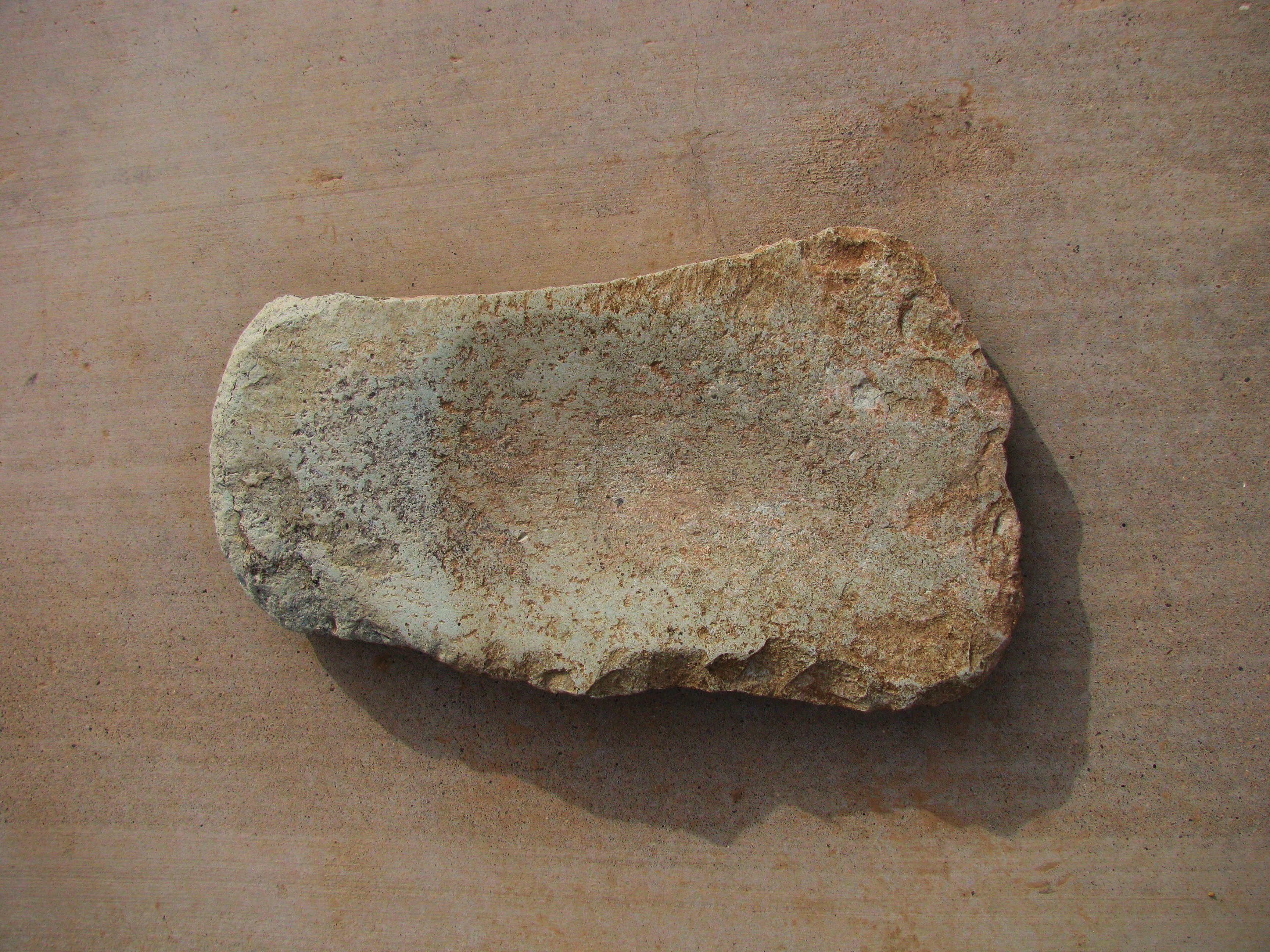
This dramatic change can be startling, but has this dramatic seasonal change always affected residents in the high desert of southwestern New Mexico and is there any evidence to support this notion?  Personal observations of the landscape suggests former inhabitants also appreciated monsoon green.  From the use of green turquoise for jewelry to the production of manos (not shown) and metates from green rocks (see below), green was and continues to be a color of renewal in the desert.

Grasslands at the Painted Pony Resort

Granite peak from the San Simon riverbed

Portal Peak from the San Simon riverbed

green stone metate