Showing posts with label how do people see. Show all posts

Tuesday

How do People See? Again

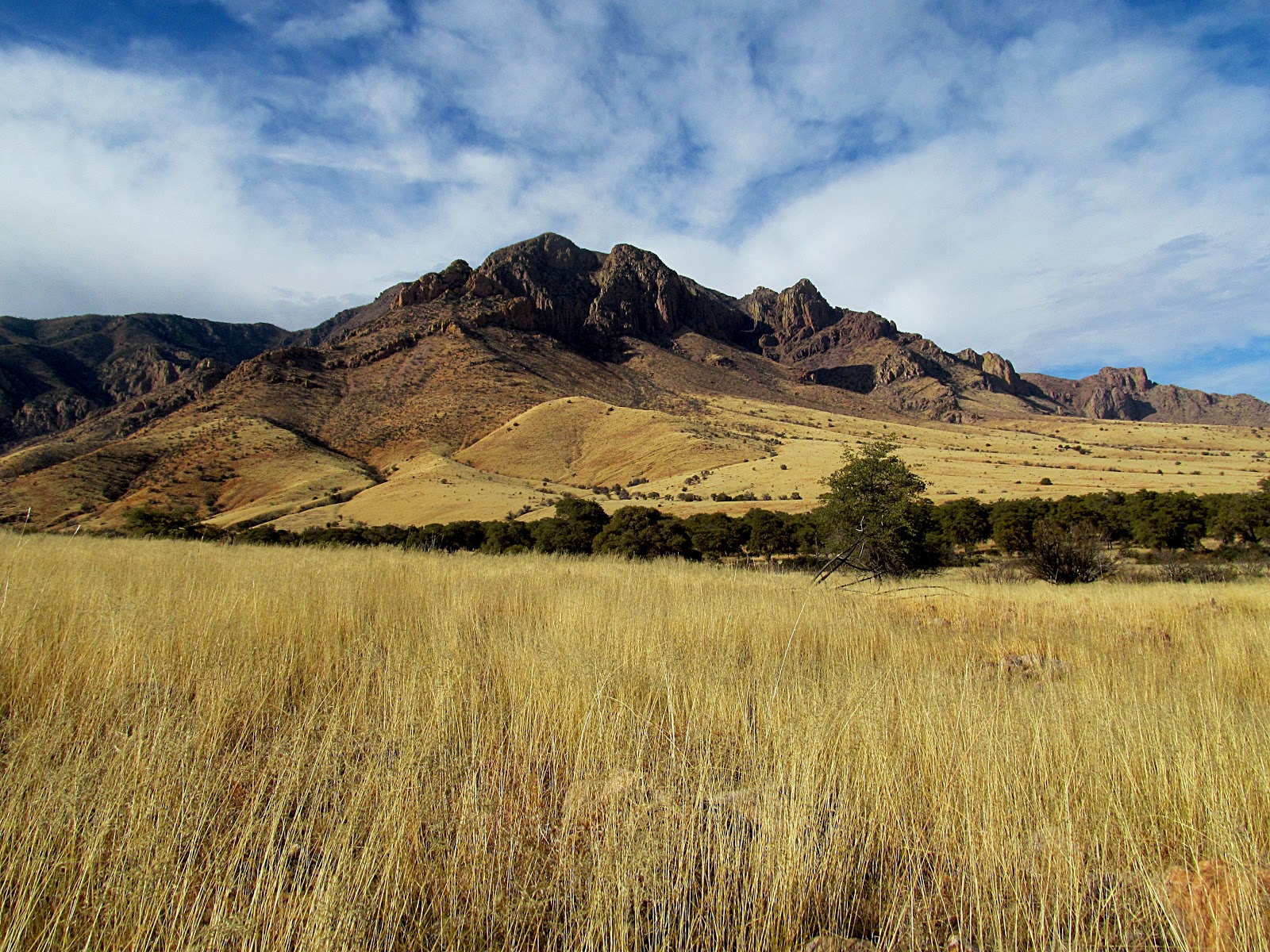
I continue to struggle with the concept of "how people see", specifically how it relates to what makes an interesting photograph.  Recently, I stumbled into a little experiment using Facebook and ended up posting 3 images and comparing their performance.  The metric I used was a "like" indicating a positive response from a viewer.  The 3 images were taken from the same location (mouth of Sulphur Canyon but of 2 different subjects) and posted on 3 consecutive days (Friday through Sunday).  Image 1 was of a view towards Darnell Peak, a multi-image panorama but presented in Black and White.  After spending several hours on creating the image I was very pleased with final outcome and posted it.  Image 2 was a simple snapshot of Portal Peak and presented in color, while image 3 was another multi-image panorama of Portal Peak also presented in color.  My expectation was the first image would preform the best.  It was a good composition, with the volcanic walls of the Chiricahua mountains rising up from the grasslands, the moon in the background, nice shadowing, and crisp details that draw the eye into the scene.  Yet after several days it received only 35 likes so I added the snap shot of Portal Peak (image 2).  Surprisingly, the quick snapshot with the top of Portal Peak in shadow, the result of a passing cloud, picked up 87 likes and was featured as a group cover image where it picked up an additional 70 likes.  I then added the final multi-image panorama, a "big picture" view, which received 46 likes.  In terms of work load the most time was spent creating image 1, the next was image 3, and image 2 (the snapshot) took the least amount of time.

Image performance, whether in the form of views or likes is important since I use the imagery as a way to create interest in the area and in the long run generate business for the Painted Pony Resort.  I can only conclude that color performs better than Black and White, and color contrast in an image is more appealing than the scope of an image.  Finally, the amount of work spent creating an image is not proportional to its public appeal.

I still like the first image the best.

Image 1, Looking up towards Darnell Peak on the south side of Sulphur Canyon.


Image 2.  Portal Peak from the south side of Sulphur Canyon.

Image 3.  Portal Peak and the mouth of Sulphur Canyon.

Sunday

Another Exercise in "How People See"

A question I have been asking for several years and have written about before is "how do people see"?  Not the physiology of vision but what one sees when looking at an image.  Specifically what makes an image appealing.  Below is another exercise in that vein, a sunrise image over the Peloncillo mountains presented right side up and upside down.  While the first image is pleasing with wispy clouds and right angled streamers the flipped image is more visually interesting, at least to me.  The clouds themselves become the center of attention and more depth is created.  While the slight downward angles created by the inverted mountains seem to focus my attention onto the clouds where I perceive the increased depth.  These images were shown in the photography group, Cochise County and its Wonders and received some support, but only 16% found the inverted image interesting, as evidenced by a like.  My only conclusion is that I'm the outlier in the distribution of "seeing" since I find the inverted image more visually pleasing and interesting.

A Peloncillo Mountains sunrise

The same sunrise but inverted

Thursday

Same Time, Same Subject, but from Arizona and from New Mexico

The wide open western skies of the San Simon Valley just beg to be photographed and the monsoon season always brings interesting views.  Recently 2 photographers, myself and another photographer captured the same cumulus monsoon buildup independently.  We were both outside at the same time and saw the same thing although miles apart and not in communication with one another.  We independently took the same image at approximately the same time, but from completely different locations, one of us on the west side of the valley, the other on the east side.  Then we both processed our images into black and white to enhance the impact of the image before posting them.  It amazes me that we both saw the same thing, were both impressed by the view, then captured it.  And since the other photographer was in Arizona when taking her photograph, while I was in New Mexico, it makes it the more interesting to me.

My image of the cloud is somewhat larger and it could be argued that I was closer to the cloud in question resulting in a larger image, but the more likely explanation is that I used the zoom.

Cumulus build up from the New Mexico side of the San Simon Valley.


The same cumulus buildup from the Arizona side of the valley.  Photo by Statia Dougherty
Addendum:  The other photographer was shooting in Black and White mode on her camera and did not have to convert to grayscale in post production.  I do not have that option on my little point and shoot camera so an extra step is required to produce Black and White images.

Friday

About Light and Color

Watching the landscape over time I have concluded it is all about light and color.  Light being the intensity and wavelengths of light from the sun filtered through the atmosphere that illuminates the landscape throughout the day and throughout the year, with or without clouds (creating shadows which add texture).  While color being the wavelengths of light reflected off the landscape as a result of the light.  While not a major revelation to most, the interaction of light and color is always producing something new to see which I find fascinating and struggle constantly with trying to create images that reflect what I see.

Since "seeing" is a combination of the biological components of vision and the processing of that information, it does not lend itself easily to study using a reductionist approach.  Rather I am forced to acknowledge that a holistic approach is required which incorporates both the biological aspects and information processing aspects of "seeing" when producing an image.  I conclude that the landscape views that I find so fascinating msut be the result of an emergent phenomena that results from the interplay of light and color interacting with visual processing creating something greater than the simple sum of its parts.

When addressing the information processing aspects of "seeing" I have no objective method for measuring what others see.  Instead I'm forced to post the image and measure others response to what was created.  While this semi-quantitative approach works it adds another whole layer of confounding variables.  The location where the image appears, the probability an image with show up in search engine rankings,  the biases associated with a specific audience that views the image, and the quality of the image reproduced on the viewers computer screen.  These additional variables impede the ability to understand how others "see" making it is difficult to tease out and concentrate on those aspects that would allow the creation of images with more universal appeal.

Below are 2 images both taken in the front garden of the Painted Pony Resort.  One is an evening view of the Yucca and Ocotillo taken with the long light of late afternoon.  While the second is an early morning view of a single Ocotillo stem starting to bloom.  These 2 images taken from essentially the same location (the single stem image is the Ocotillo on the left side of the first image) and at the same time of year demonstrate how differences in light and color affect the final image produced.  But in presenting these images (which I personally find appealing) I'm still no closer in understanding how people "see".

A view of the garden.


desert flower
A single Ocotillo stem beginning to flower


Monday

How do People See?

One intriguing question asked over the past several years is "how do people see?"  Not the physiological process of vision but rather the neurological processing that takes place in the brain when viewing a photograph.  Below is an image of an evening sunset over the Chiricahua mountains with a single illuminated cumulus cloud.  It is displayed both right side up and upside down (and reversed, keeping the light from the same direction).  In both images my eye is immediately drawn to the interface between the ground and the sky.  In the upper image the ridge line of the Chiricahua mountains (including Cochise Head) is at the bottom of the photograph and black silhouette outline of the ridge top provides a nice demarcation between the ground and sky.  While the lower image, the black silhouette of the ridge is at the top of the photograph.  In this instance the tan of sky now becomes the "ridge line" and the "ground" with a black sky.  But as the eye scans down the image, the cloud reorients the mind reminding the viewer it is sky not ground.

arizona clouds
right side up


arizona clouds
upside down and reversed

Creating Depth in Photographs

I'm not a professional photographer, just a guy in the desert with an inexpensive automatic digital camera asking the question "how do people see"?  While the physiological process of vision is fairly well understood, the analysis and interpretation of visual information seems less well defined.  There appears to be variability in the cognitive processes used by humans in interpreting a visual image and one way to qualitatively understand this process is through photography.  In other words "what makes a pleasing image"?  In trying to understand "how people see" a number of techniques have been employed from low level aerial photography to change perspective, in combination with tilt-shift to draw attention to specific elements in a photograph, to multi-image aerial panoramas to provide the viewer with a "big picture" view of the landscape from a different perspective.  But one of the more challenging approaches is the creation of depth in a 2D photograph.  There are a number of approaches to creating depth in a photograph but the most satisfying approach I have found is in-camera layering.  Briefly, a scene is divided into a number of layers then observing differences in contrast, texture, color, and focus between the layers then composing the scene to maximize the differences to make an image.  By maximizing these layer differences it is possible to impart to the viewer a sense of depth in a 2 dimensional photograph without resorting to anaglyphs.  Below are several examples of successfully layered images.  In these images one or more components appear to stand out as a result in differences contrast, texture, color, or focus (depth of field).  It is important to point out all these images were all photographed in the auto mode so depth of field manipulations were not used.

peloncillo mountains hiking
Peloncillo Mountains outcrop


The image above (click to enlarge) is a 4 image panorama taken on a sunny day.  Although similar in color, the outcrop in the foreground is differentiated from the valley floor by differences in texture.  While it is differentiated by color from the Chiricahua mountains in the background resulting in the appearance of an outcrop of rock that appears to float on the background.

creating depth in photographs
Hill in Animas Valley in southern New Mexico


This image is a low level aerial photograph with a tilt-shift effect added.  While employing an overall difference in perspective, in this case differences in contrast between the layers (shadow along the ridge top in comparison to the background desert floor) creates an edge resulting in increased depth.  This effect is enhanced by the tilt-shit which draws the viewer towards the area of increased depth which helps the viewer interpret increased depth in the photograph overall.


photograph of new mexico mountains
Low level aerial view of the Big Hatchet mountains
This image, also a low level aerial photograph of the landscape, relies on layered differences in color to enhance depth.  The foreground layer is brown while the background layer, with Big Hatchet Peak, is blue in color.  This layered color difference helps the foreground peak stand out against the background again resulting in increased depth.

Jhus canyon grave
Headstone in Jhus canyon


This final image, of a headstone in the Chiricahua mountains, uses color and texture differences to impart a sense of depth to the image.  The flat smooth brown headstone is contrasted against a background of shrubs and grass which differ in both color and texture again imparting a sense of depth to the image. 

This technique works at any scale from small to large landscapes, and is just a matter of composition.

While a number of different post production processing techniques may be used on a photograph, generally on a slight decrease in input levels and a slight increase in contrast suffice to bring out the layered depth in a composition.